
The data primarily pertains to activities in March, which had only a few days under the Covid-19 lockdown. For April , hence, CGST collections could be much lower, fear analysts.

The bonds were available for seven years. Since these were not traded in the secondary market, redemption took place at maturity.

Going by the strict criteria set, only Maharashtra, Tamil Nadu, Gujarat, Karnataka, Uttar Pradesh, Andhra Pradesh, Madhya Pradesh, and Haryana qualify for such extra borrowing, as of now.

Krishnamurthy Subramanian listed land, labour, law, and liquidity as the key areas of big reforms.

Such cold-shoulder by banks also indicates a credit freeze that is hard to overcome, unless the government comes out with credit guarantee schemes for loans given by banks. Since that is not happening, and there is no indication of that too, banks are not willing to listen to RBI prodding.

'India's sizeable foreign exchange reserves should serve as a buffer.'
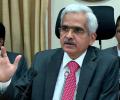
While efforts are being mounted on a war footing to arrest its spread, COVID-19 will impact economic activity in India directly through domestic lockdown. The second-round effects, it said, would operate through a severe slowdown in global trade and growth.

'Most of the measures the finance minister announced will take effect after the lockdown.' 'By that time, millions of people will be starving.'

Bureaucratic insensitivity gave way to compassion with the state administration, police and passersby joining forces to help the stream of Indians fleeing Delhi.
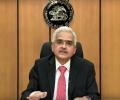
The RBI on Friday said it will give banks Rs 1 trillion through targeted long-term repo operations (TLTROs), of up to three-year maturity, to deploy in "investment-grade corporate bonds, commercial paper, and non-convertible debentures over and above the outstanding level of their investments in these bonds as of March 27, 2020."

To ease pressure due to the coronavirus lockdown, corporate have asked banks and the government for a six-month liquidity line, so that they can pay off their suppliers and employees.
The volume in the anonymous trading platform, NDS-OM, was Rs 7,210 crore - less than half the normal volume, but not as bad as the start of the day indicated.
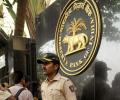
The idea is to keep the RBI's information technology (IT) infrastructure in top shape to run the payments and settlement system uninterrupted 24x7, and run the full gamut of RBI functions from the secured data centres, as nearly 14,000 RBI staffers, except the senior-most management, work from home.

Under the Vivad se Vishwas scheme, the MNCs will have to bring in disputed amount to India, else, the entire money will be considered as loan from subsidiaries on which interest will have to be paid.

The mop-up could have been much higher, but tax on imports fell 2 per cent y-o-y.

Minutes of the MPC meeting show Das felt economy needs more monetary stimulus as inflation outlook remains uncertain.
The panel may include or seek inputs from former RBI Governor Urjit Patel, former chief economic advisor Arvind Subramanian, Sajjid Chinoy of the PM-EAC, Rathin Roy, among others.

Nominating Das, the Banker magazine, which announced the award, said India's banks have faced a series of challenges, from non-performing loans to issues around fraud. Faced with these challenges, Shaktikanta Das has taken steps to bring banking in India up to standard via a restrained approach to governance.

The ministry said it was an anti-abuse provision amid growing instances of NRIs shifting their stay in low or no-tax jurisdiction to avoid tax payment in India.

The numbers become all the more important because actual tax collections fell short by Rs 1.91 trillion compared to what was projected in 2018-19. Besides, the Budget for FY20 did not give actual figures for 2018-19, but the revised numbers given in the interim Budget.
 © 2026 Rediff.com - Investor Information - Advertise with us - Disclaimer - Privacy Policy - Sitemap - Feedback - About us - Terms of use - Grievances